Subscribe to Our Newsletter
The Reality of Surrealism
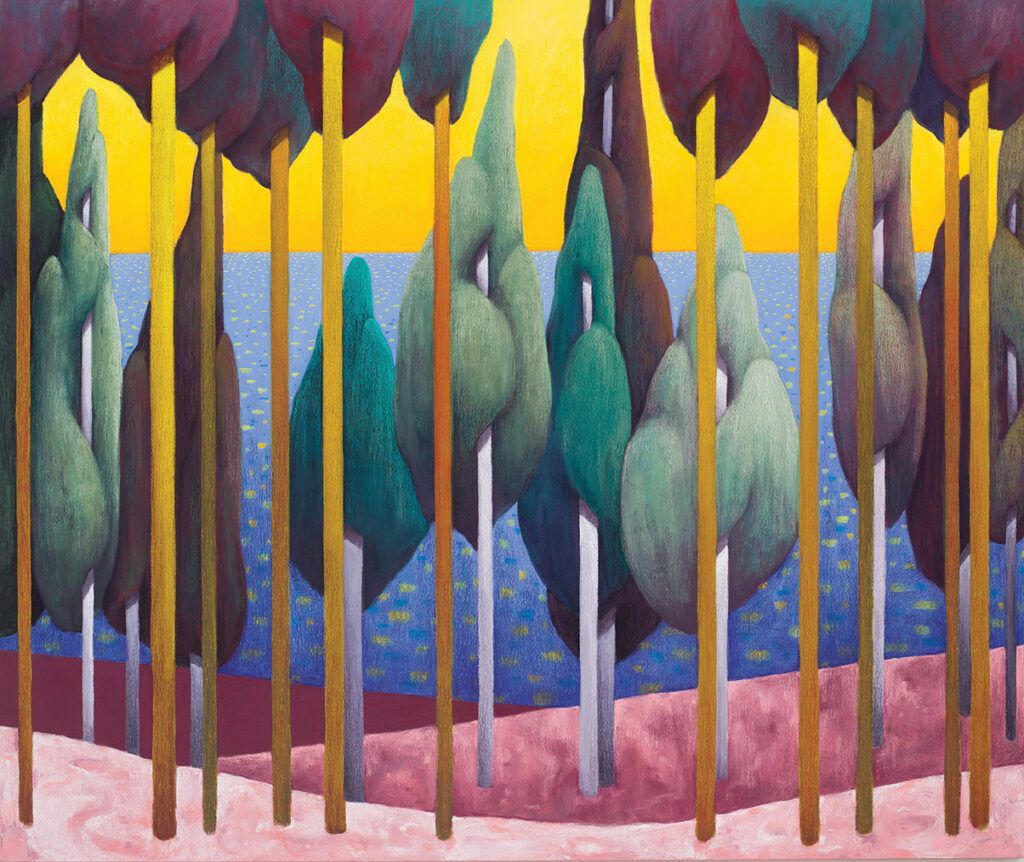
The Hepworth Wakefield in England mounts an exhibition exploring the significance of Surrealist landscape from the early practitioners to today’s rising stars.
By Patti Zielinski
There is little in this world more surreal than war.
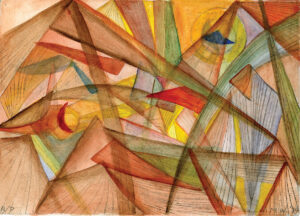
Mary Wykeham, Dream–Desert, 1979
© Judith Wykeham Permanent Art Collection (The Hepworth Wakefield)
During World War I, as a young medical student, André Breton was sent to the frontlines at Verdun, France, as a stretcher-bearer, where he witnessed the mental torment of the bloodied soldiers. Later, while working in hospital psychiatric wards, caring for shell-shock victims, he encountered the writings of Sigmund Freud, who theorized that people are divided between their conscious minds, dominated by reason and social constraints, and the unconscious, where a reservoir of instincts, desires, and raw experiences lie repressed, awaiting the opportunity to break through and have their voice. Breton noted the connection between Freud and the psychiatric patients’ more visceral way of expressing their world.
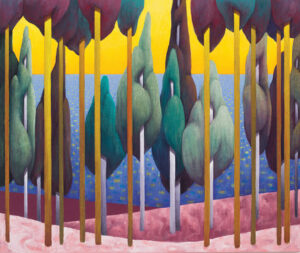
Nicolas Party, Landscape, 2022
Courtesy of the artist and The Modern Institute/Tony Webster Ltd., Glasgow. Photo: Adam Reich
These sensibilities took root with Breton. He was already was immersed in the riotous wave of Dadaism and the current of postwar feelings of defeatism and disgust from the aftermath of the absurdity of the political and military might and the resulting carnage that mankind wrought on one another.
It was through this lens that Breton gradually developed the tenets espoused in his Manifeste du surréalisme (Manifesto of Surrealism). Its publication in 1924 spurred an international movement that broke down the boundaries between dreams and reality, rejected reason, called for a reimagining of ourselves, and turned art into a revolution to overthrow oppressive structures.
A century later, everything—and yet nothing—has changed.
Forbidden Territories: 100 Years of Surreal Landscapes (November 23, 2024 to April 27, 2025), exclusively at The Hepworth Wakefield in West Yorkshire, England, commemorates the centennial of Breton’s Manifesto, which gave rise to the Surrealism movement.
For the full story click on the preferred link below
for your Print or Digital subscription:

Subscribe to Art & Antiques for your Digital or Print copy