Subscribe to Our Newsletter
Building His Own Legacy – The Noguchi Museum
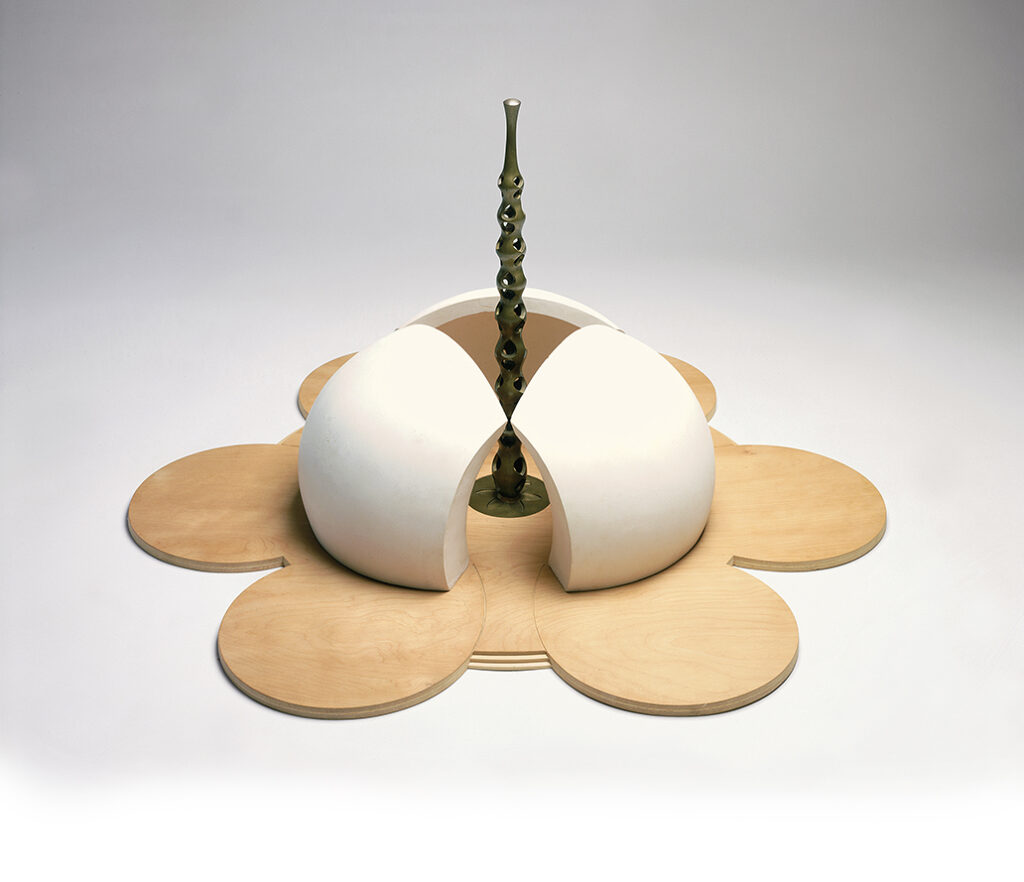
A lotus-inspired design for a competition commemorating
the 2500th anniversary of the birth of Buddhism in New Delhi
Marking its 40th anniversary, The Noguchi Museum in New York revisits the original vision of its founder, Isamu Noguchi
By Fred Voon
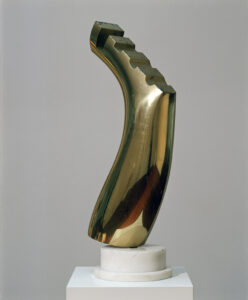
Foot Tree, 1928, brass
Scattered across Western Europe are single-artist museums that were founded by 20th-century masters during their lifetimes. There’s the Museu Picasso in Spain, the Marc Chagall National Museum in France, and the Rudolph Tegner Museum in Denmark. Salvador Dalí designed the Dalí Theatre-Museum—which opened in 1974 in his hometown of Figueres, Spain, and some consider the building itself to be his last great work (he’s even buried in a crypt beneath it).
In the United States, such institutions—like The Andy Warhol Museum in Pittsburgh or the Georgia O’Keeffe Museum in Santa Fe—tend to be posthumously established. A rare exception is The Noguchi Museum in New York, created in 1985 by the prolific American sculptor Isamu Noguchi, three years before his death.
To commemorate its 40th anniversary, the museum presents “Against Time: The Noguchi Museum 40th Anniversary Reinstallation” (through January 11, 2026), an installation that hews closely to Noguchi’s original curation of the second-floor galleries. Through a journey of over 60 works, the viewer experiences the stunning breadth and versatility of his career—sculptures that incorporate every material from paper to plastic, aluminum to alabaster; designs that extend to gardens, playgrounds, theater sets.
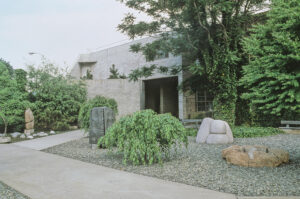
A sculpture garden on the museum’s premises in Long Island City,
Queens.
“A museum is, I suppose, a repository against time,” Noguchi wrote in the original 290-page catalogue that accompanied the exhibition. “There is a semblance of eternity, a sense of permanence that is implied by a museum, and a removal from time’s passage.” Building a home for his creations, then, was a way of immortalizing his legacy on his own terms.
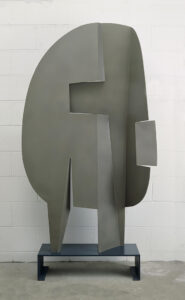
Originally an incomplete aluminum work from 1958, Humpty Dumpty was recreated in stainless steel in 1973.
“He was never truly satisfied with his work being displayed in a museum setting,” says the museum’s curator and director of research, Matthew Kirsch, who has been with the organization since 2007. Noguchi considered the typical gallery to be a stifling, sterile space, one where sculptures are presented as objects in a white-washed vacuum, devoid of context. A singular artist like himself, who didn’t belong to any particular movement, required a different treatment. “He was always kind of his own little satellite in the New York avant-garde world,” Kirsch says.
Born in Los Angeles in 1904, Noguchi was the son of a Caucasian mother and a Japanese father. From age 2 to 13, he was raised by his mother in Japan. He then returned to the States to attend boarding school and high school in Indiana, before enrolling in pre-medical studies at Columbia University. With his mother’s encouragement, Noguchi took up evening classes in sculpture with Onorio Ruotolo, who recognized his potential, secured him a studio, and mounted his first exhibition. “Ruotolo set Noguchi on his course and helped him to understand his own talent,” Kirsch says. The budding sculptor soon dropped out of college to pursue art full-time.
For the full story click on the link below for your Digital subscription:

Subscribe to Art & Antiques for your Digital or Print copy