Subscribe to Our Newsletter
Always In Fashion
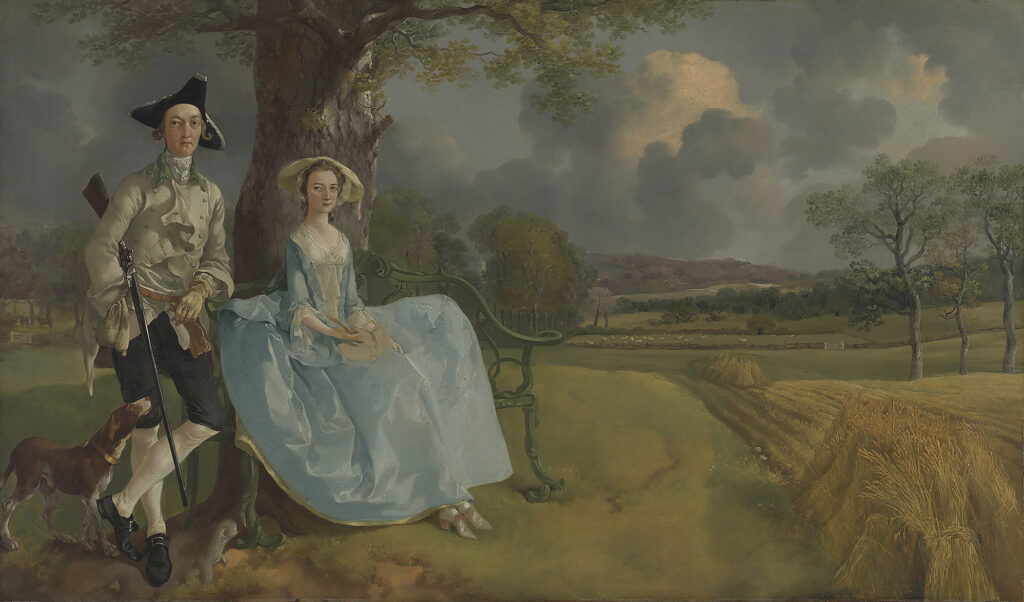
Mr. and Mrs. Andrews (c. 1750)
All photos by Joseph Coscia Jr., courtesy of the Frick Collection
Thomas Gainsborough wasn’t a clothing designer,but he knew how to paint those garbed in the fashionable wear of his time, as an exhibition at the Frick Collection reveals
By David Masello
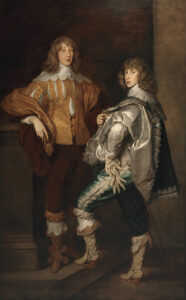
Lords John and Bernard Stuart, after Anthony van Dyck (c. 1765)
All photos by Joseph Coscia Jr., courtesy of the Frick Collection
While Thomas Gainsborough understood the need to expertly render on canvas the fashions of his time and place, 18th-century England, he also knew what the clothing represented. He mordantly commented in 1768: “Fashion, let it consist of false or true taste, will have its run, like a runaway Horse.” The world of fashion was notoriously fickle then, as it is now and always has been.
Indeed, it is easy to be carried away by the seeming glamour of the fashion world. Years ago, when one of my editorial titles at Town & Country magazine was that of Men’s Fashion Editor, a topic about which I knew little, I had to attend runway shows, often meeting the most famous, name-brand menswear designers. At a show in New York for the Italian brand Zegna, I was seated next to the namesake man himself, Ermenegildo Zegna, as the parade of young, attractive men strutted past in tailored suits. To witness the attention the models received from the equally fashionably garbed attendees, amid camera flashes, the thump of rap, and the adoration bestowed on Signor Zegna, the message of fashion was conveyed. To be in the presence of the truly fashionable is to be fooled into believing you are younger, better looking, more noticed in this world should you, too, wear such clothes.
Thus, the allure of fashion.
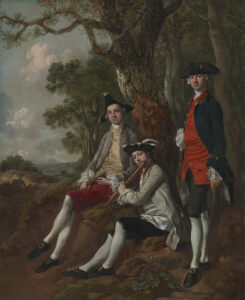
Peter Darnell Muilman, Charles Crokatt and William Keable (c. 1750)
All photos by Joseph Coscia Jr., courtesy of the Frick Collecti
This dynamic is something Gainsborough (1727–1788) recognized when he became known as the great chronicler of English society’s most fashionable and illustrious people. A show at New York’s Frick Collection through May 25, “Gainsborough: The Fashion of Portraiture,” reveals that, while fashions may change, the beauty of the artist’s works, particularly his portraits, endure. As Aimee Ng, the museum’s recently appointed Peter Jay Sharp Chief Curator, who put together the show, says, “The spectacular and at times, to modern eyes, absurd fashions in portraits by Thomas Gainsborough continue to fascinate viewers today. This exhibition necessarily deals with clothing and personal attire, while exploring how fashion was understood in Gainsborough’s time, how it touched every level of society, and how portraiture itself was as much a construction and invention as a sitter’s style.”
Not so unlike a fashion editor, Ng, who is one of the museum world’s most charismatic and engaging curators, chose more than two dozen portraits by Gainsborough that best reveal the fashions of his time. The works come from the Frick’s own enviable collection of Gainsborough canvases, along with many works from other U.S. venues and the U.K. The Frick’s show is billed as the museum’s “first special exhibition dedicated to the English artist” and the “first devoted to his portraiture ever held in New York.”
For the full story click on the link below for your Digital subscription:

Subscribe to Art & Antiques for your Digital or Print copy