Subscribe to Our Newsletter
Eyes on the Road
Photographer Calvin Seibert takes road trips through the American West in search of sites that most people wouldn’t find photogenic, but through his lens become art.
By Jesse Glass
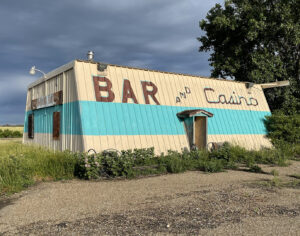
A casino and bar on the Fort Peck Indian Reservation in northeastern Montana.
Calvin Seibert is a purist in his artistic approach. “I once waited for over an hour for the lighting to be just right on an Oklahoma church,” says Seibert, a photographer who seeks out quirky, often “unseen,” American sites, particularly in the American West. Using just an iPhone 15, tripod, a smaller tripod that can attach to poles, and a Bluetooth button for long exposure shots (so as not to nudge the camera), he takes solo trips around the United States in his blue Subaru. Only sometimes does he crop his photographs, and rarely does he edit for color correction. Rather, Seibert wants his works to feel as natural as possible, and he enjoys getting as close as he can to the final product upon first take. “Sometimes I wish I’d brought a ladder just to get a different perspective, but I always decide to go with the least equipment possible.”
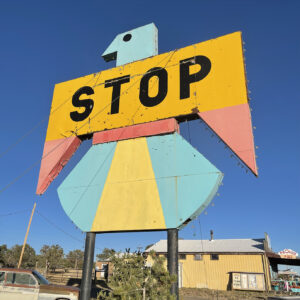
Along U.S. Route 60, Pie Town, New Mexico.
Seibert grew up in Vail, Colorado, where his father founded the Vail Ski Resort. He describes the space as a great playground when it was being built from 1962–72. As soon as the workers left each day, Seibert’s imagination would soar, and he and his friends played among the buildings under construction and became their own builders using what was left behind. He has always been curious about what structures and objects can be and become. This is evidenced in the thousands of photographs for which he is known.
“I could have studied architecture but realized I could make art that’s architectural. That way I could be my own best client.” Although Seibert has always been taking photographs, he is also known for making astonishingly detailed Modern and Brutalist-style sandcastles on beaches in and near New York City. He lived for many years in Manhattan as a working artist, but now lives outside of Denver. His sandcastles, like his photography, do not hinge on his using rare or expensive tools or materials. For his beach creations, his materials are simply sand, water, buckets, and plexiglass tools. He can spend up to 10 hours meticulously building these ephemeral “castles.” Before they wash away, he carefully documents them with a photograph. Because his structures are so distinctive, he was a regular guest on national news programs and profiled in many publications.
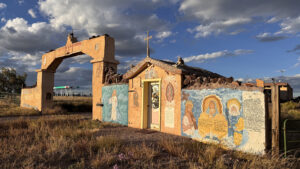
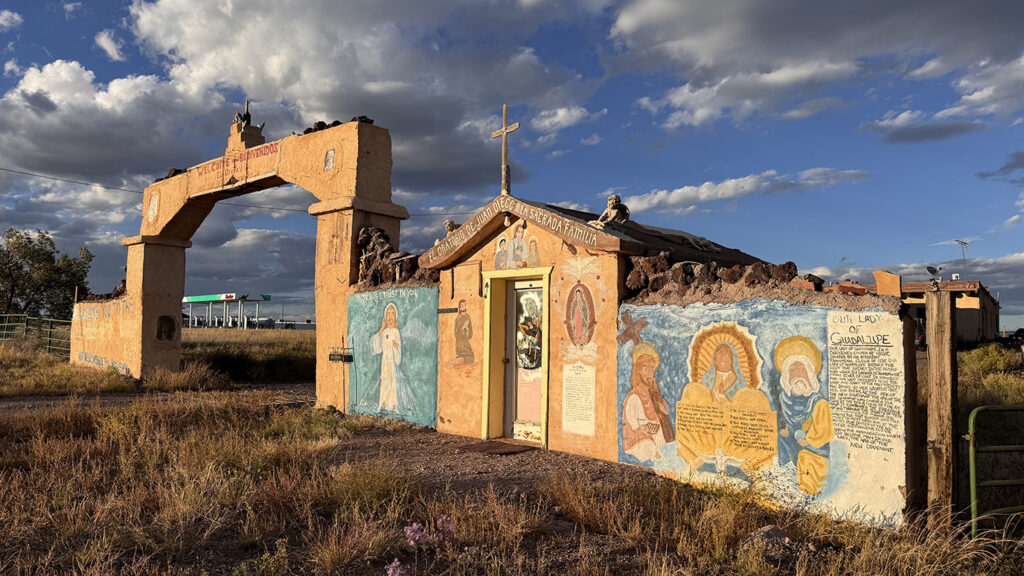
A religious structure on U.S. 285, outside Antonito, Colorado.
He learned early on, while attending the School of Visual Arts in Manhattan, that he enjoyed making things on a daily basis. “I’m happier finishing something by the end of the day,” he says.
Although he often has a destination in mind when leaving his home to take photographs, he prefers to take a different route back, confident that he will find new sites. He talks, for instance, about having recently traveled a stretch of Route 50, known as the “loneliest highway in America,” yet found enough along the way to fill an entire album in his portfolio. He often uses Google Streetview on his travels to investigate nearby towns, sometimes even using the application to take virtual tours inside buildings. Seibert is an adventurous, avid collector of subjects, so much so that he sometimes camps out on the side of the road, particularly when in Colorado, where he feels more at home.
Wherever he is traveling, Seibert likes to be on his own, for he is better able to see the life and personalities of structures that way. Instead of taking just generic landscape photos, he prefers to take “portraits”—perhaps of a classic 1950s motel awash in neon, a giant yellow silo-like candy store in Minnesota, a road sign absent language, or even a shredded roadside tire backdropped by a freight train. Of an abandoned farm structure he found, he comments, “I saw this collapsing barn, and it looks as if a giant thumb had been pressed against it.”
For the full story click on the link below for your Digital subscription:

Subscribe to Art & Antiques for your Digital or Print copy