Subscribe to Our Newsletter
Dressing Over Time
An exhibition at the Los Angeles County Museum of Art reveals an array of exquisite garments worn by two fashionable Chinese women who lived through multiple eras
By Michael Govan
The reopening last spring of the Los Angeles County Museum of Art (LACMA) might have been the biggest news in the world of art museums, and among the first shows to debut at the new facility is “Fashioning Chinese Women: Empire to Modernity” (through October 12), an exhibition that reveals the complex evolution of Chinese women’s dress over time—from embroidered robes of the late Qing Dynasty (around 1900–1912) to the sleek silhouettes of the 1930s and on into the 1960s. MICHAEL GOVAN, the CEO and Wallis Annenberg Director of LACMA (and the singular force behind the realization of the new building), comments here on the 70 works featured in this show, all of which will become a permanent part of the museum’s collection. The Taiwanese-born, Canadian-raised fashion designer Jason Wu was commissioned to design the mannequins that “wear” these exquisite garments. Wu’s designs not only show off the silhouettes to maximum effect, but he created mannequins that assume natural poses, eerily replicating the very effects these garments had on their original wearers. —The Editors of Art & Antiques
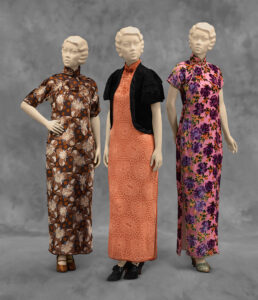
A trio of long dresses from the 1930s. Jason Wu’s mannequin heads are expressive and realistic.
Garments bear traces of the people who wore them—a fabric selected to mark a special occasion, a silhouette reshaped as tastes or roles changed. “Fashioning Chinese Women: Empire to Modernity” offers a seldom-seen perspective on that dynamic, merely through the wardrobes of two women whose lives spanned decades of global transformation, from the end of the Qing dynasty to life in the Chinese American communities of midcentury California.
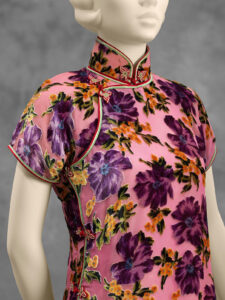
An elaborately embroidered floral-patterned dress made in 1939–40.
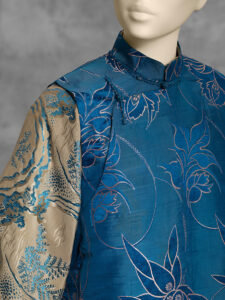
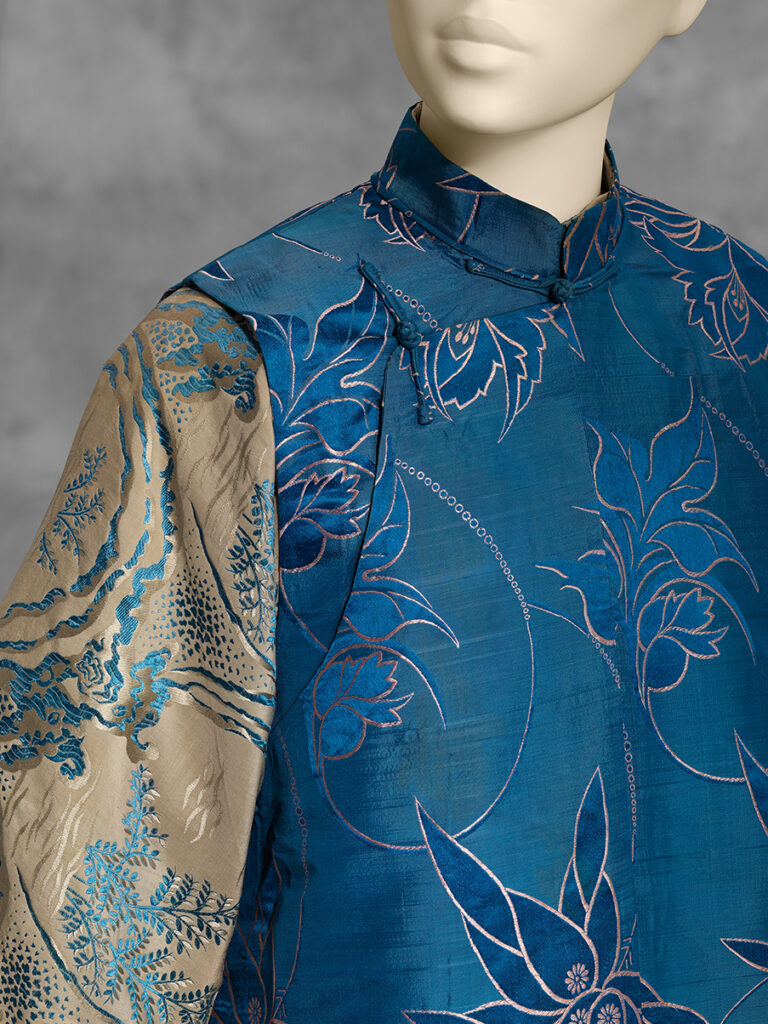
A long vest made in Shanghai in the mid 1920s
This remarkable collection, lovingly preserved by artist and designer Chere Lai Mah, fills a critical gap in LACMA’s holdings. While the museum has long collected Chinese imperial dress, few of our works reflected the experiences of modern Chinese and Chinese American women. Lai Mah’s gift allows us to redress that imbalance. Thanks to her care and vision, this is not just a collection of clothing—it is an archive of resilience and cultural expression passed through generations.
For the full story click on the link below for your Digital subscription:

Subscribe to Art & Antiques for your Digital or Print copy