Subscribe to Our Newsletter
Still in Place
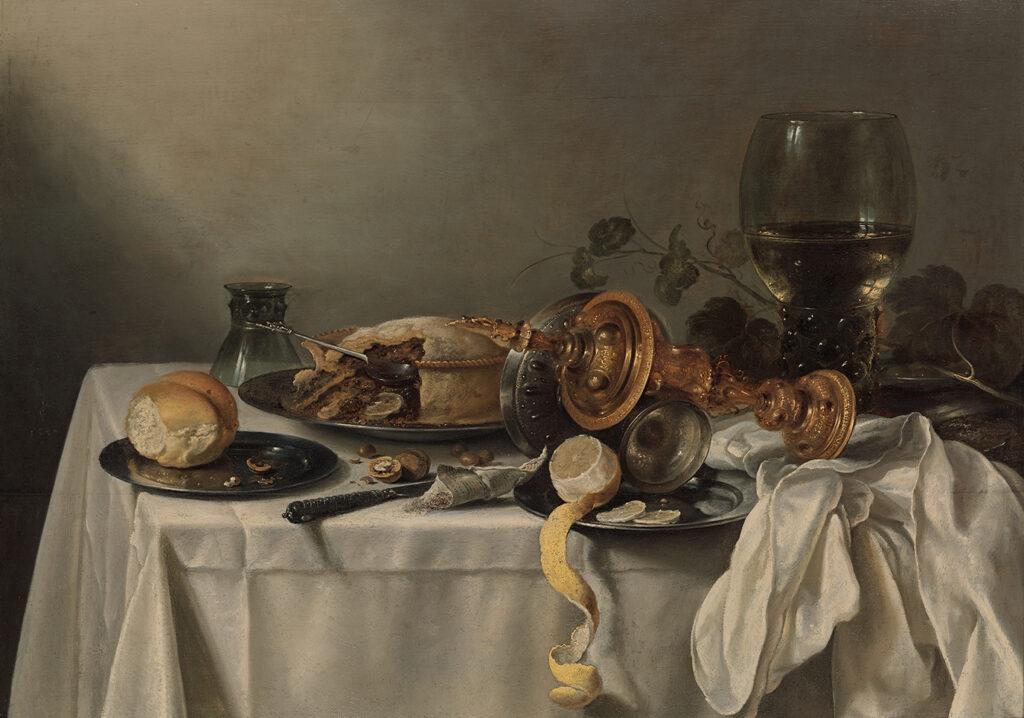
Three masterful still lifes by the 17th-century master of the genre, Pieter Claesz, are now on display at the Kunsthistoriches Museum, in Vienna, each relating an active story
By David Masello
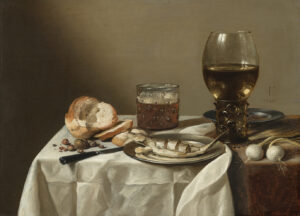
Of the three seminal works by Pieter Claesz on view now at the Kunsthistoriches Museum, Still Life with Glass Goblet best reflects the artist’s uncanny ability to expertly depict the effects of light and reflections on surfaces.
There’s an art to setting the table and Pieter Claesz knew how to do it. In his home and painting studio in Haarlem in the 17th century, the Dutch still-life master knew what his guests, or in his case, his patrons, would want to see.
For his Still Life with Glass Goblet (1642), he depicts a typical Dutch snack of the era, having placed on a tabletop, hastily laid with a rumpled cloth, a plate of fresh herring, two onions, bread, a stein of beer, along with some nuts scattered atop the surface. In another painting, Still Life with Fruit Pie, Overturned Silver Tazza, Gilt Cup, and a ‘Roemer’ (wine glass) (1637), he seems to have gone to more trouble. Even though the assemblage of goods is all askew, he did put out extra fine silver and decorative chinaware that bespeak a wealthy household of the time. And for his Vanitas Still Life (1656), he has set a more somber table, given that its centerpiece is a human skull, augmented with bones picked clean of meat, tipped over goblets and an open timepiece, objects that reflect a scene meant to depict the transient quality of life, a common theme of the Dutch still life.
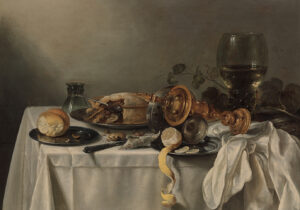
The tabletop of Claesz’s Still Life with Fruit Pie, Overturned Silver Tazza, Gilt Cup, and a ‘Roemer’ (wine glass) features objects and foods that reveal the wealth of the Netherlands during their Golden Age.
Vienna’s Kunsthistorisches Museum highlights the special vision of Claesz (pronounced CLAHSS) through just three of his best paintings, though he is estimated to have painted some 230 works during a 40-year career (the show continues through March 15, 2026). But all that we need, as viewers, are these three works to see his mastery of the genre and his ability to use symbols to convey profound and resonant stories. “The show is not only about admiring the surface but about understanding the choices behind what was depicted—and what was not,” says Jonathan Fine, Director General of the Kunsthistoriches. “His ability to depict the play of light on metal, glass, or fruit is extraordinary. He was admired in his time for the sophistication and realism of his work, and that reputation endures.”
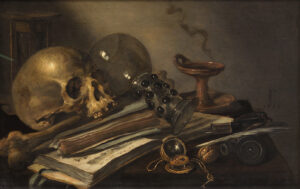
The third work featured in the show is Claesz’s more somber Vanitas Still Life.
While most artists throughout continental Europe were still depicting Biblical scenes and characters, the Dutch, in what is known as their Golden Age, were celebrating domestic life as the subject of paintings. And one such subgenre was the still life. Such works were typically commissioned by a wealthy merchant class, particularly as the Netherlands’ long war with and occupation by Spain ended in 1648. Even though the objects arrayed on these tabletops remain consistent— everything from goblets of wine and hunks of meat, whole birds, fruits and nuts, beer—it was not just in the way that they were assembled on the tabletop that mattered but also the symbolism that each object represented.
For the full story click on the link below for your Digital subscription:

Subscribe to Art & Antiques for your Digital or Print copy